
Ebook Publishing
The advantages and disadvantages of ebook publishing
Have you often wondered how to get published? If so, ebook publishing might be the right avenue for you to take to realize that dream. Ebook publishing covers a broad range of products, from booklets on psychic readings, to how-to software, to hobby manuals, to choose-your-own-ending kids' books. Ebook publishing might not be an ideal solution for everyone, but don't reject the idea of making your book into a downloadable product without at least considering the pros and cons.
Ebooks have a bad reputation
Yes, there are lots of money-grabbing schemes disguised as digital novels out there. You can literally find hundreds of websites offering "foolproof" ways to make "thousands of dollars in your spare time"—all you need to do is purchase a downloadable self-help guide for $29.99! These authors make money by selling books on how to sell ebooks to make money.
But that's not for you. You have a real story to tell, whether it be a novella, an illustrated children's book, or a hot novel with a storyline ripped from the headlines. Should you consider this approach for your masterpiece?
The pros and cons of ebook publishing
Ebooks are easy to make
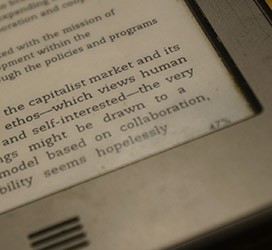 Advantage: Almost anyone can make an ebook. You can transform your book from a word-processing format into an ebook by formatting it according to the platform on which you're publishing. Two of the most common platforms are Amazon's Kindle and Smashwords. Once it has been formatted, all you need is a few minutes to publish your book, and it could be up for purchase in as little as one or two days. Even better, it's free to publish on both Kindle and Smashwords, so anybody can publish an ebook for worldwide sale with a few simple clicks.
- Disadvantage: Because almost anyone can make an ebook, it can be difficult to distinguish yourself from "almost anyone." To make your book equivalent to a "real" book (i.e., print), find and evaluate several digital book publishers before making a deal. A flashy website does not guarantee a great publisher. Look at the publisher's ebooks to see if yours fits in with that mix. Would you buy one of their books? Check the terms of any agreement you must sign to make sure you retain the rights that you should.
Ebooks offer quick access to your document
- Advantage: If readers want your book now, they can purchase it with a credit card and download it on the spot—no shipping, no waiting. Minimal production costs mean a much lower price per copy, increasing the chances of catching the impulse buyer.
- Disadvantage: Some readers prefer to hold a book in their hands and will pay more for the right to own the object and not just the story. These tactile types might not spend money on what seems like "nothing" to them. In addition, "quick access" is quick only if you know how to do it. Some book buyers may have trouble figuring out the process or may not have the correct software to accommodate your book format.
Ebooks cost very little to produce
- Advantage: Lower production costs mean you can charge less or retain a larger percentage of the proceeds. Some print-on-demand publishers charge little or nothing to list ebooks and can offer a higher profit margin than a traditional publisher, especially if you give them rights to sell print-on-demand copies.
- Disadvantage: Lower production costs mean you can charge less, but you'll make less per book. You may also find that you don't sell as many copies because potential buyers don't know it exists or where to purchase it.
Ebooks do well in certain niche genres
- Advantage: If you have a how-to manual, user's guide, romance novel, or children's book, ebooks may work well for you. Parents know how to find, buy, and download low-cost ebooks, and today's kids certainly know how to read from a screen. With virtual how-to guides, buyers can print only the pages they need to take to the garden or shop.
- Disadvantage: If your book doesn't fit the ebook niche markets, you may discover that your book is overlooked or underappreciated. Some sites offer a large number of ebooks, but only in select genres. However, niche genres work well because they have a pre-existing audience.
Deciding to make your book available as an ebook takes research and thought. Here are some links to help you with your investigation (Scribendi.com has no association with these sites and makes no claims about their content):
- 10 Questions to Ask Before Committing to Any E-Publishing Service
- Self-publishing a Book: 24 Things You Need to Know
- Ebook Publishing Gets More Difficult from Here: How Indie Authors Can Survive and Thrive
Whatever you decide, we wish you the best of luck with your publishing effort. Whether your book is printed traditionally or digitally, a good book will keep readers coming back for more! To make your book stand out, be sure to take advantage of our ebook editing service and our ebook formatting service.
Image sources: Pexels.com, kamiel79/Pixabay.com
Publish Your Own Book. Get Professional Ebook Editing.
Hire Our Expert Editors, or Get a Free Sample
Related Posts
How to Copyright a Book
Once you've written a story, there are many ways it can be delivered to the world. In this article, we'll look at how to copyright a book.
How to Get Published
Congratulations! You've completed the long, arduous task of writing a novel. You have an error-free book, and we've helped you put together a winning query package. It's time to send your baby out to seek its fame and fortune.